
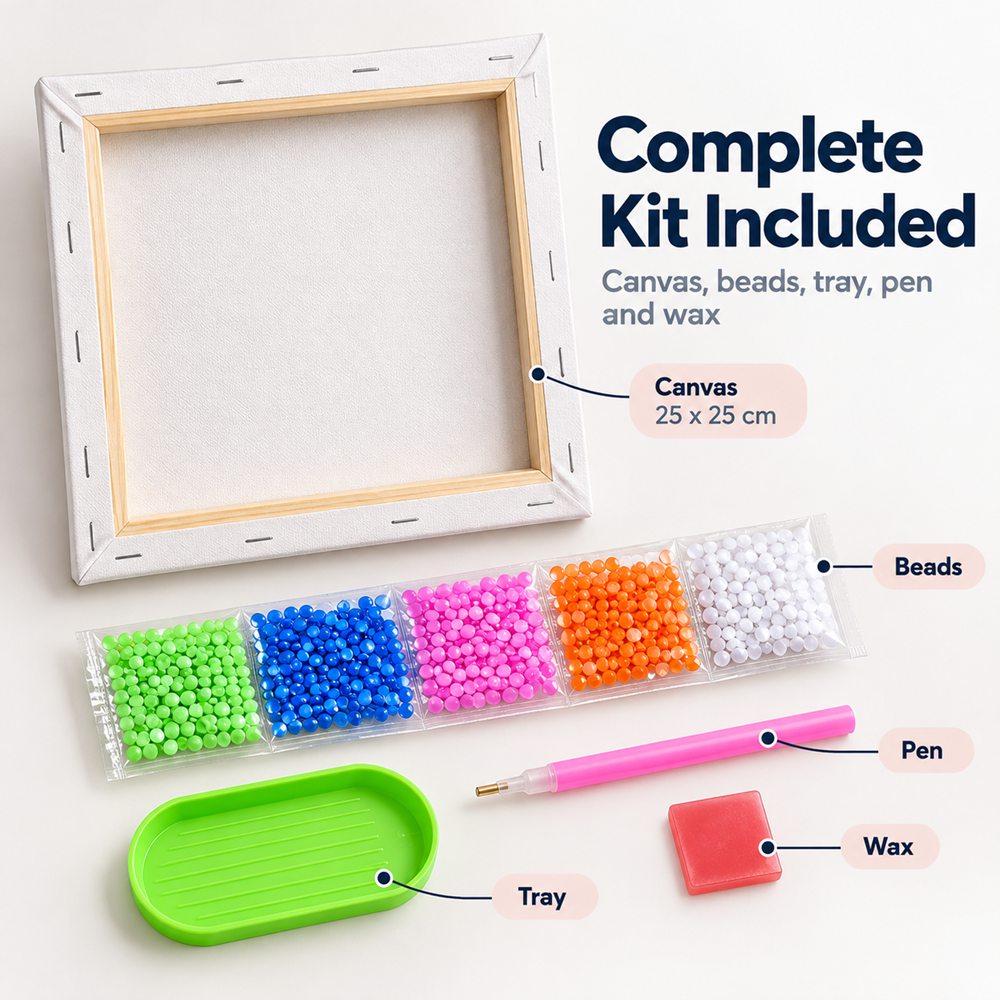
Before approving a framed craft size, define the exact area being measured. Ask whether the quoted dimensions refer to the visible artwork, its supporting structure or the overall supplied product. Mark the measurement endpoints and viewing direction, request a matching sample record, and keep product dimensions separate from package dimensions. A size in a catalogue name is not a complete measurement definition.
Identify what the catalogue size describes
Pinzhi DIY’s pearl painting kit has a size label in its catalogue name, and its images include a rear view of a supporting structure. Those references help a buyer locate the product discussion. They do not establish which edges control the stated measurement or whether another offered version uses the same definition. Begin the inquiry by asking the supplier to identify the measured area.
The visible artwork can be smaller than an overall product outline when borders or additional surrounding elements are involved, but the relationship for the selected item still needs confirmation. Do not calculate one dimension from the other using the photograph. Ask the supplier to show the actual boundaries and describe any relevant distinction in the quoted version.
Create a measurement map with named endpoints
Mark the areas you need to understand on a reference view. A buyer can distinguish the artwork area, the underlying support and the overall supplied outline without assuming they are separate removable parts. Ask the supplier to confirm which named area corresponds to each quotation field. Keep unclear construction details as questions rather than assigning a familiar frame type to the image.
Define the viewing direction alongside the area. Front width, rear support width and side depth describe different observations. If a back view helps identify an element that is not visible from the front, request the corresponding front or side view as well. The same sample reference should link all views so the purchasing team does not compare different product versions accidentally.
Separate the fields that different teams need
Merchandising, purchasing and packaging teams may need different measurements. Use separate fields so that a single figure is not copied into every document. The supplier should state which dimensions are available and how they were determined for the quoted item. An unanswered field should remain unresolved rather than inherit a number from another field.
Dimension field | Purpose of the inquiry | Confirmation requested
Visible artwork area | Identify the intended decorative area | Marked front-view endpoints
Supporting structure | Understand the referenced support outline | Matching rear or side view
Overall supplied product | Discuss the complete item footprint | Agreed outermost boundaries
Product depth | Discuss the side profile where relevant | Named faces and a side reference
Sales package | Plan the supplied package separately | Packing description and package measurements
Request evidence that matches the written definition
Ask the supplier for a sample measurement record that identifies the item, orientation and endpoints. A photograph can help show where a measurement was taken, while a written schedule can make the definition easy to reference. Neither should be left disconnected from the other. If the supplier provides only a number, ask which marked area and product version it represents.
Discuss any required measurement method or acceptance criteria explicitly with the supplier. Do not invent a tolerance from a catalogue image or apply a tolerance associated with another product. The buyer’s requested requirement and the supplier’s confirmed offer should be distinguishable until both parties agree on the order specification. Preserve the agreed wording with the sample record.
Keep product and package copy consistent
A retailer may need dimensions for a listing, a shelf plan or a sales package. Confirm the purpose before choosing which field to use. Product measurements should not be presented as carton measurements, and a package outline should not be used to describe the visible artwork. Where a listing needs several dimensions, give each one a clear label rather than relying on an unqualified size line.
Review printed package copy against the agreed schedule before approval. If a sample or support arrangement changes, ask whether the dimensions and their definitions have changed too. An unchanged product name does not prove that every version has identical measurements. The supplier should identify the version to which the proposed package or listing description applies.
Carry the measurement basis into a repeat order
Retain the approved measurement map, written schedule and sample identifier together. A repeat inquiry should point to that record and ask whether the quoted product still follows it. If the supplier proposes a revised support, border or package, request an updated definition for every affected field. Keep previous versions available so a changed reference does not silently replace the original agreement.
The resulting record confirms the dimension description that the buyer and supplier agreed to use. It does not verify material composition, durability, age suitability or certification. Those requirements need separate specifications and appropriate evidence. A focused measurement record is easier to use when it answers the size question directly and does not absorb unrelated product claims.
• Name the measured area before accepting a dimension.
• Keep front, rear and side references tied to one sample.
• Record product measurements separately from package measurements.
• Retain the definition and agreed criteria with each approved version.
Frequently asked questions
Does a size in the product name identify the overall framed product?
Not necessarily. Ask the supplier which area the size describes and request a matching view with marked endpoints. Treat the catalogue label as an inquiry reference until the definition is confirmed.
Can the visible artwork size be calculated from a catalogue picture?
Do not use image proportions as an order measurement. Perspective, cropping and the relationship between the artwork and support can be unclear. Request the supplier’s measurement for the defined area.
Should package measurements share the product size field?
Keep them separate. State whether a dimension describes the artwork, support, overall product or sales package. This helps prevent a value prepared for one purpose from being reused without its original meaning.
What should happen if the supplier changes the support arrangement?
Ask which measurements or measurement definitions are affected. Request an updated sample record and review any related quotation, listing or package copy before approving the revised version.
Product and contact references
Catalogue reference: confirm matching item: https://pinzhidiy.com/product/25-25-cm-diy-pearl-painting-kit-with-frame/
Related catalogue reference: https://pinzhidiy.com/products/?product_filter=%e7%8f%8d%e7%8f%a0%e7%94%bb
Contact Pinzhi DIY: https://pinzhidiy.com/contact/
Pinzhi DIY blog: https://pinzhidiy.com/blog/